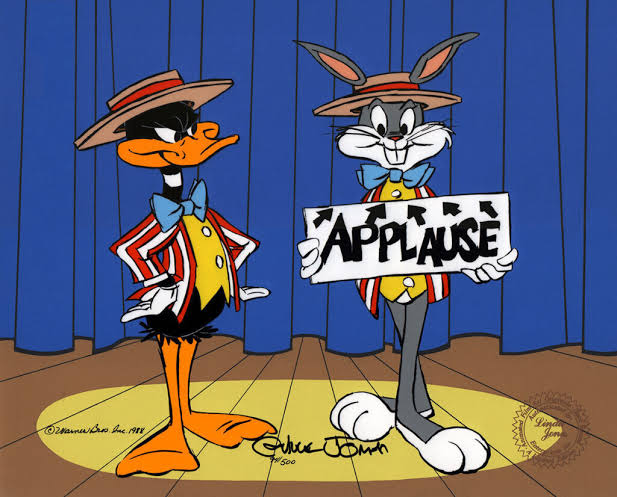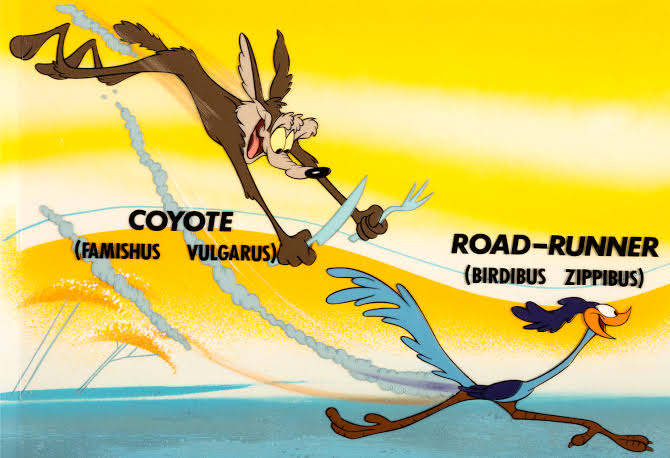
With the release of Coyote vs. Acme, the creator of its title character has been at the forefront of my mind. Chuck Jones is a comedy legend and he knew something that takes some comedians a lifetime to figure out.
The man who gave us Bugs Bunny, Daffy Duck, and Wile E. Coyote, who crafted some of the most enduring comedic moments in the history of animation, understood that a joke is never really about the joke. “Humorous dialogue,” he said, “is not what is said; it is where it is said, how it is said, who is doing the saying, and who are the characters involved.”
In other words, the punchline is the last place you should look.
This idea sits at the very heart of improv. And yet, if you asked most people what makes improv funny, they’d probably say something like, “the crazy things people come up with. The wild ideas. The unexpected twists. The verbal gymnastics. The jokes.”
But if you ever get the chance to see a truly great improv scene and look past the words, what you’ll find underneath is something far more interesting.
Character is the Engine
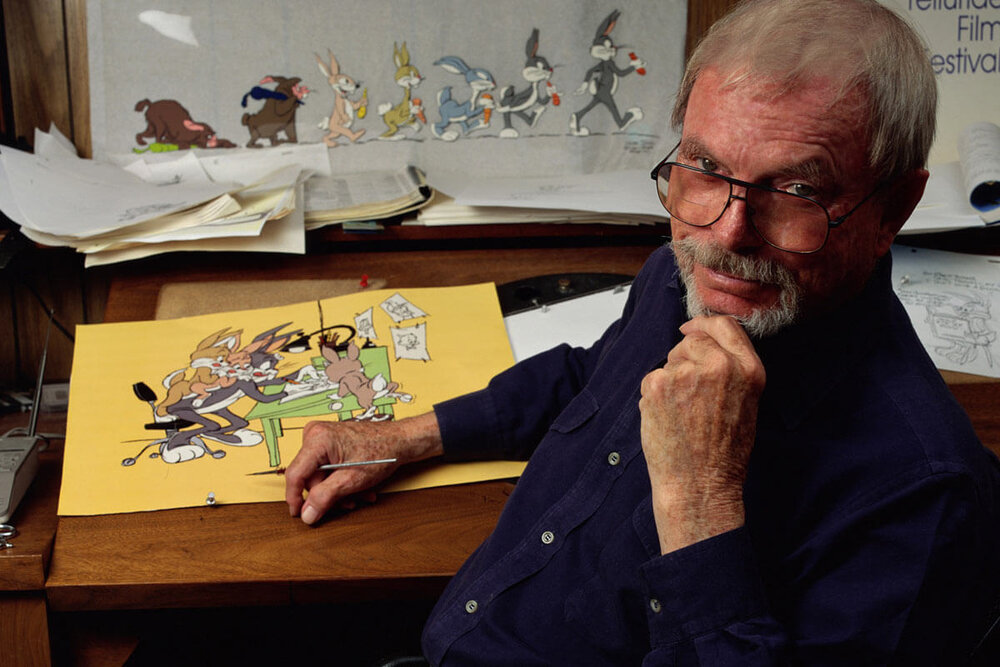
Jones built his entire comedic universe on character. Bugs wasn’t funny because of his lines. He was funny because of who he was—unflappable, confident, always two steps ahead—and because of how that character collided with the world around him. Put Bugs in a room with Elmer Fudd and you already have comedy before anyone opens their mouth. The dynamic is the joke.
Improv works the same way. The best improvisers aren’t the ones with the quickest wit or the sharpest one-liners. They’re the ones who can walk into a scene and instantly become someone. They make a choice—a posture, a vocal quality, a point of view—and commit to it fully. And then, crucially, they let that character respond honestly to whatever happens next.When two fully realized characters meet on an improv stage, the comedy often takes care of itself. You don’t need to write the funny. You just need to be someone specific enough that the situation reveals comedy naturally. And in this great cosmic joke called life, the seeds of comedy abound.
Premise is the Soil
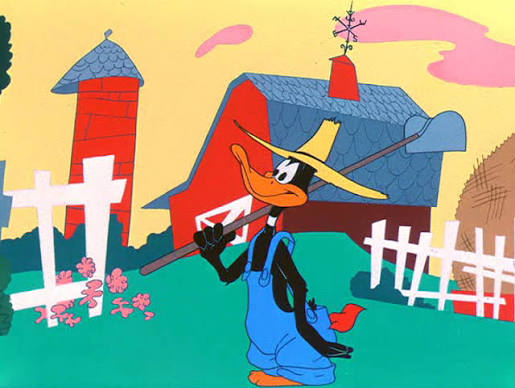
Jones also knew the importance of where something is said. Context. Situation. Premise.
A man slipping on a banana peel is mildly amusing. A man slipping on a banana peel at his own wedding is funnier. A man slipping on a banana peel at his own wedding while flipping up his bride’s veil only to reveal that it’s an orangutan eating a banana—look out!
Premise is the soil in which comedy grows. It sets the stakes, establishes the rules, and creates the conditions under which character can be tested. In improv, the premise is often established in the first thirty seconds of a scene—sometimes in the first exchange, sometimes in a single gesture. And it’s not always dramatic or complicated. Sometimes it’s as simple as: these two people have very different ideas about what’s happening right now.
That gap — between what one character believes and what another believes, or between what the audience knows and what the character knows — is a well that never runs dry. It’s not a gag. It’s a premise. And a good premise can sustain an entire scene, an entire set, sometimes an entire career.
The Interaction is Where the Magic Lives
But here’s the part that ties it all together, and the part that Jones identified so precisely: it’s how voice and premise interact.
This is the invisible engine of comedy. Not the setup alone. Not the character alone. But the friction, the chemistry, the collision between the two.
In improv, this is sometimes called the game of the scene — the repeating pattern of behavior that emerges when characters with specific points of view are placed inside a specific situation. It’s not planned. It’s discovered. Two improvisers step out on stage, something happens, and if they’re paying close enough attention, they start to feel the game emerge. And then they play it. They heighten it. They find new ways to run it through different corners of the scene until it’s wrung out every last drop of what made it funny in the first place.This is why improv is so hard to teach and so easy to spot when it’s working. You can teach someone to listen. You can teach them to make strong character choices. You can teach them to establish a clear premise early. But the interaction — the moment when all of those elements start vibrating together at the right frequency — that’s something you have to feel your way into. Every night. Every scene.
What This Means for Anyone Who Performs
Whether you’re an improviser, a sketch writer, a stand-up, or someone who just wants to be funnier in meetings, Jones’s insight is worth tattooing somewhere you’ll see it every day.
Stop chasing the joke. Stop hunting for the clever line. Stop trying to be funny and start trying to be specific.
Know who you are in this moment. Know where you are and what’s at stake. And then pay close attention to the other people in the room—what they want, what they believe, how they’re responding to you. Let the interaction breathe.
Comedy isn’t a destination you arrive at. It’s something that emerges from the relationship between fully committed elements: character, context, and the electricity that passes between them.
Chuck Jones spent decades drawing that electricity one frame at a time.
Improvisers try to find it live, in real time, with no script and no second takes.
Different media. Same truth.
It was never about what was said.
It was about how, where, and why.